
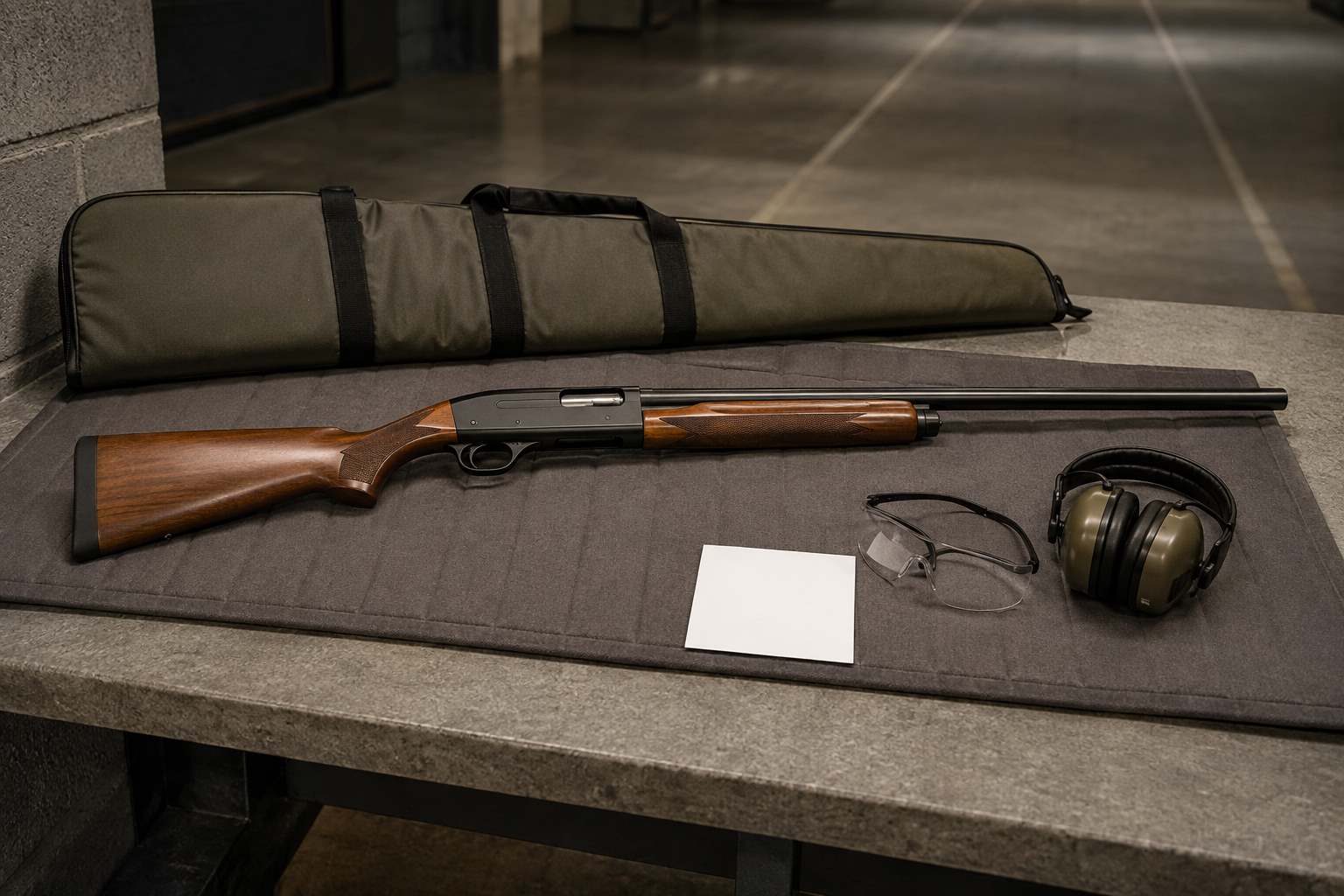
A firearm does not have to look neglected to be unsafe to use. Storage can loosen a component, moisture can affect the bore, and ammunition can be wrong for the firearm even when the cartridges appear nearly identical. A control that suddenly feels stiff, gritty or different from usual deserves attention too.
The best preparation routine is simple enough to repeat every time. Before the firearm goes into a case or any ammunition is loaded, create a quiet pause: make certain it is unloaded, look for changes, verify the ammunition and equipment, and stop if something does not make sense. That brief delay protects the shooter, people nearby and the firearm.
Inspect It Before Packing It
Choose a well-lit place where you will not be interrupted. Keep ammunition separate from the firearm while you inspect it. Point the muzzle in a safe direction and follow the unloading procedure in the owner's manual. If you cannot confidently establish that the firearm is unloaded, stop there.
Do not rely on a visible safety, an empty magazine well or the way the firearm was stored. Those details do not prove that the chamber or action is clear. Check the chamber, action and any magazine or loading area relevant to that particular model. Once the unloaded state has been confirmed, leave the action open during the inspection when the design permits it. An open action makes the condition easier to verify and reduces the risk of mistaking the firearm for one that is ready to fire.
This first check is not the time to rush through familiar motions. A routine is valuable precisely because it gives you a dependable way to notice when something is not as it should be.
Look for Problems That Cleaning Will Not Solve
Begin with the outside of the firearm. A slow visual inspection often reveals more than immediately taking out cleaning supplies. Check for cracks, new dents, corrosion, bent or missing parts, unusual gaps and components that no longer seem to sit where they should. Pay special attention to the points that secure major assemblies and to anything that appears loose after storage or transport.
Inspect the bore and muzzle according to the manufacturer's directions. Moisture, heavy fouling, an obstruction or an object that you cannot identify is a reason to end the inspection. Never fire a shot to clear a suspected obstruction. Do not improvise with a tool that could damage the bore or leave material behind.
Controls should also be treated as evidence of the firearm's condition. Operate them only in the manner described by the owner's manual. They should not demand unusual force, feel unexpectedly rough or gritty, or behave inconsistently. A changed feel does not automatically identify the fault, but it does tell you that further use should wait.
Live ammunition has no place in this diagnostic process. Cycling, forcing or repeatedly testing a firearm with live rounds can turn an unexplained mechanical issue into a much more serious event.
Verify Every Cartridge Before Loading
A box full of ammunition is not proof that its contents are suitable. Read the cartridge designation and compare it with the markings and instructions for the firearm and ammunition. Confirm that it is appropriate for that specific model. Cartridges that look similar are not interchangeable, and a round should never be forced into a chamber.
Examine each round for deep dents, bulges, corrosion, damaged cases, loose projectiles, damaged primers or contamination. Be cautious with ammunition that has been exposed to water, excessive heat, oil or storage conditions you cannot account for. Unknown history is a reason to question the round, not a reason to assume it is fine.
If a cartridge does not chamber normally, stop immediately. Do not strike the firearm, push harder or try a different angle. Follow the safe unloading procedure, then identify the cause before continuing. If the reason is not obvious, postpone the session. A range trip is not an appropriate place to force an answer to a problem involving ammunition or chambering.
Check the Equipment Around the Firearm
The firearm may be ready while the rest of the setup is not. Pack suitable eye and hearing protection, and use the case or other transport method required by the range. Before leaving, check batteries in optics, lights and electronic hearing protection where applicable. Confirm that mounted equipment is secure, does not obstruct a control and does not interfere with normal handling.
Do not make the range the first test site for a new accessory. A newly installed component, unfamiliar holster, replacement magazine or new cleaning product should be understood and checked beforehand. If you are unsure how an accessory affects handling or compatibility, consult its instructions before taking it along.
Replacement parts and used equipment deserve the same caution. A claim that a component fits a similar model does not establish compatibility with yours. Verify the exact model with the manufacturer or a reputable professional. Previous use, unknown modifications and uncertain storage history all make assumptions less reliable.
Know When the Trip Should Be Cancelled
A useful checklist should produce a decision, not encourage optimism. The firearm is ready for the range only when all of these conditions are satisfied:
– It has been confirmed unloaded before inspection.
– No unexplained damage, obstruction, missing part or loose component is present.
– The controls and operating parts behave normally under the owner's manual's instructions.
– The ammunition is clearly identified, compatible and visibly sound.
Stop if you find a crack, concerning corrosion, an obstruction, an unusual trigger or control feel, or a missing or loose part. Stop if a cartridge will not chamber normally. Stop, too, when you notice a change but cannot explain it. The inability to identify a problem is itself useful information: the firearm is not ready for the next step.
When the manual does not resolve the question, ask a qualified gunsmith or instructor. Guessing may save a few minutes, but it removes the very margin that the inspection is meant to create.
Inspect It Again After Shooting
Post-range maintenance should follow the owner's manual rather than a generic schedule copied from another firearm. Use only products and procedures the manufacturer approves or recommends. More lubricant is not automatically better; excess oil can collect dust or migrate into places where it does not belong. Cleaning is maintenance, not a substitute for looking carefully at the firearm.
Unload it safely before cleaning or transporting it after the session. Look for new wear, damage or anything that felt unusual while shooting. Write down those observations while they are still fresh, especially if the same issue could be difficult to recognize later.
No short inspection can predict every possible failure. It can, however, create a dependable opportunity to catch trouble before loading begins. If anything remains unclear, delaying the range trip and getting qualified help is not an overreaction. It is the most useful result the routine can provide.